
Catch the small stuff now, so it doesn’t turn into an emergency call later.
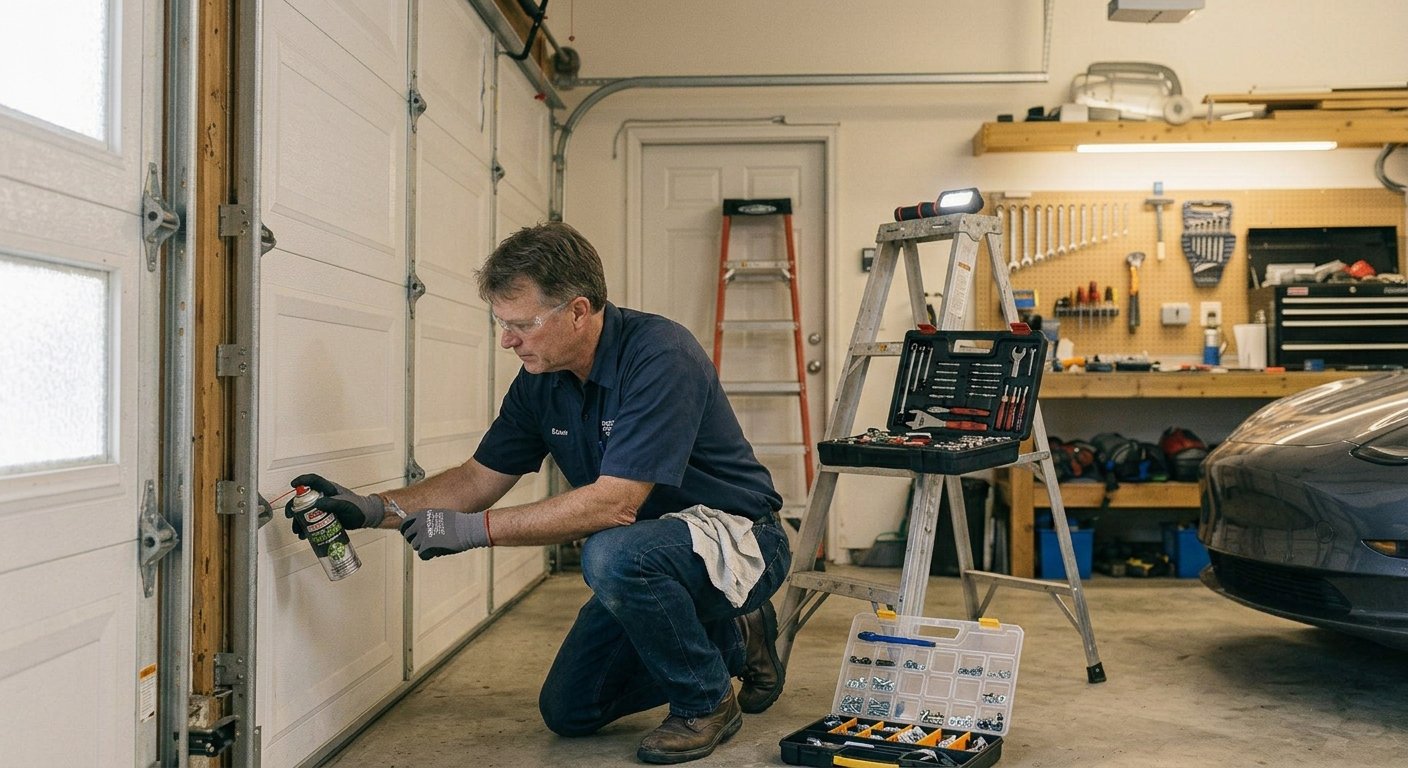
Most garage door emergencies don’t happen out of nowhere — they start small. A squeaky hinge, a roller that’s slightly worn, a spring under more strain than usual. On their own, these seem minor. Left alone, they’re usually what leads to a broken spring, a snapped cable, or a door that comes off its track at the worst possible time.
A tune-up is a full check of your door’s moving parts — springs, cables, rollers, hinges, tracks, and the opener — plus lubrication, tightening of loose hardware, and a balance test to make sure the door isn’t straining the opener motor more than it should. We catch wear before it becomes a breakdown, and if something does need replacing, you’ll know about it while it’s still a small, affordable fix.
A yearly tune-up costs far less than an emergency repair, and it’s the easiest way to keep your garage door running quietly and safely for years.
Don’t wait for a breakdown — a quick inspection now can save you an emergency call later.
Free estimates, honest pricing, no surprise charges once the job’s done.
A few common questions before you call.
Once a year is typically enough for most homeowners, though doors used heavily (like in a business or multi-car household) may benefit from checks every six months.
We inspect springs, cables, rollers, hinges, and tracks, test the opener and safety sensors, lubricate moving parts, tighten loose hardware, and check the door's balance.
It can catch early signs of wear — like a spring losing tension or a cable starting to fray — before they fail completely, which usually means a cheaper, planned fix instead of an emergency one.
Most tune-ups take 30–45 minutes, depending on the door's condition and whether any adjustments are needed.
Yes — most wear isn't obvious until something actually breaks. A tune-up catches the parts that are wearing down quietly before they become a bigger problem.

A1 Express Garage Door LLC — garage door repair and installation for Maple Grove, Plymouth, Brooklyn Park, Champlin, and the northwest Twin Cities metro.
Copyright © 2026 A1 Express Garage Door Services . All rights reserved.